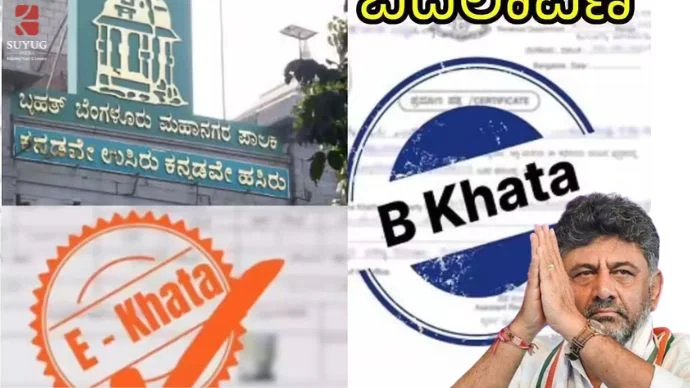
If you’re planning to buy a property in Bangalore, you’ve probably come across terms like E-Khata, B-Khata, and different types of property deeds. While these may sound technical at first, they play a crucial role in determining whether a property is legally safe and future-proof.
This blog simplifies the difference between E-Khata and B-Khata in Bangalore and explains the various property deeds in India in a clear, buyer-friendly way—without complicated legal language.
What is Khata?
A Khata is an official property account maintained by the BBMP (Bruhat Bengaluru Mahanagara Palike). It records key details such as:
Khata is essential for several property-related processes, including:
What is E-Khata?
E-Khata (Electronic Khata) is the digitized and fully legal version of Khata issued by BBMP.
Key Features of E-Khata:
Most premium and RERA-approved projects by reputed developers come with E-Khata.
What is B-Khata?

B-Khata was introduced to record properties that do not completely comply with BBMP regulations but still fall under the property tax system.
Key Features of B-Khata:
Important: Paying property tax under B-Khata does not make the property legally valid.
E-Khata vs B-Khata: Key Differences Explained
An E-Khata property is fully legal and approved by BBMP. It is eligible for home loans, allows building approvals, supports hassle-free property registration, and offers higher resale value—making it a safer and smarter investment.
A B-Khata property, on the other hand, is considered semi-legal. It usually faces challenges in getting bank loans, does not allow building approvals, comes with restrictions during registration, and generally has a lower resale value.
Why Buyers Should Always Prefer E-Khata
For today’s smart homebuyers—especially millennials and Gen Z investors—E-Khata is non-negotiable. It offers:
When investing in Bangalore real estate, always choose E-Khata properties developed by trusted brands with transparent documentation.
Different Kinds of Property Deeds in India
Apart from Khata, property deeds define ownership rights and legal standing. Here are the most common deeds buyers should know:
1. Sale Deed
The most important legal document in property transactions.
It transfers ownership from the seller to the buyer and must be registered. The sale deed acts as final proof of ownership.
2. Agreement to Sell
Signed before the sale deed, this document outlines the price, payment terms, and timeline. It does not transfer ownership.
3. Gift Deed
Used when a property is gifted—usually among family members. There is no monetary exchange, but registration is mandatory.
4. Partition Deed
Used to divide jointly owned or ancestral property among co-owners.
5. Lease Deed
A legal agreement between the property owner and tenant, specifying rent, lease period, and terms.
6. Release Deed
Used when one co-owner releases their rights in favor of another, commonly within families.
How Khata and Deeds Impact Your Property Investment
Even if a project looks attractive, an improper Khata or unclear property deeds can turn it into a risky investment. Buyers should always verify:
Reputed developers like SUYUG Infra prioritize transparency, legal compliance, and buyer-first practices—making them a safer choice for long-term investment.
Conclusion
Understanding E-Khata vs B-Khata and the different property deeds in India is essential before making any real estate decision in Bangalore. A legally compliant property not only protects your investment but also ensures better growth and hassle-free ownership.
If you’re exploring premium, E-Khata-approved residential projects in Bangalore, always choose a developer known for trust, compliance, and quality—because smart buyers never compromise on legality.

Share it on:



Posted on 04 Jul 2026
3 min read
Posted on 29 Jun 2026
3 min read
Posted on 26 Jun 2026
3 min read
Posted on 26 Jun 2026
3 min read