
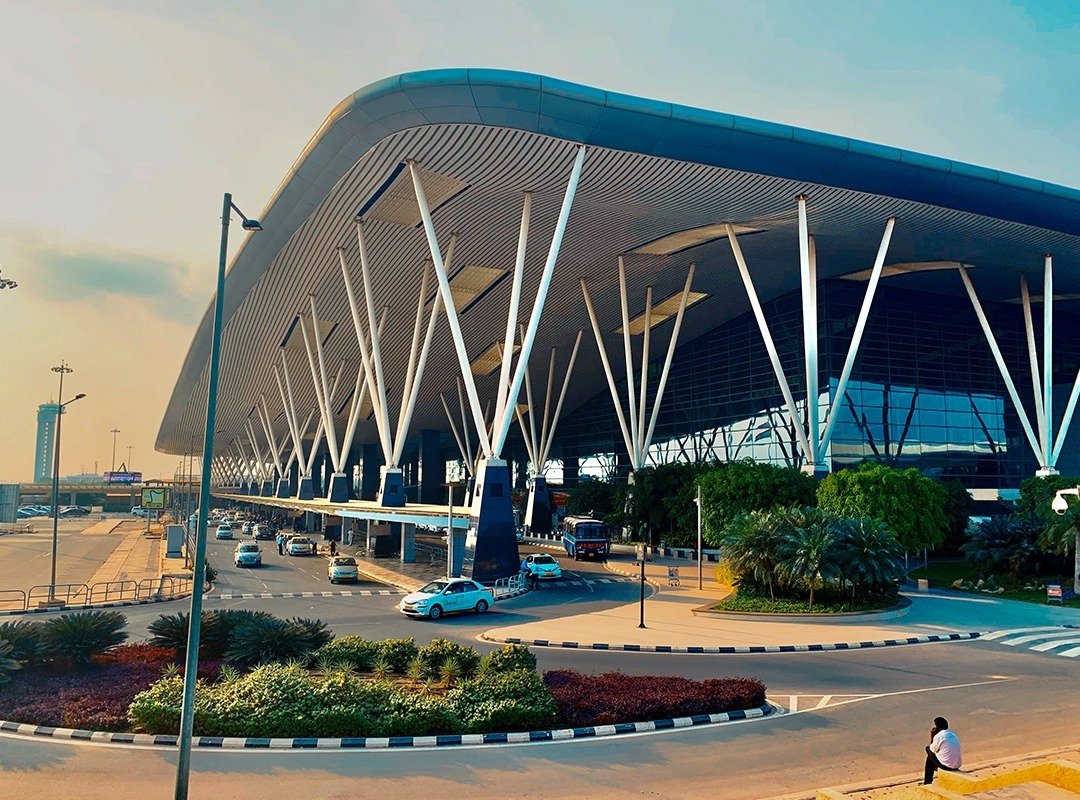
Bengaluru, often called India’s Silicon Valley, is now planning its second international airport, and the spotlight is firmly on South Bengaluru. With the existing Kempegowda International Airport (KIA) rapidly approaching its limit, state leaders are fast-tracking a proposal to build another large-scale airport — one that could rival KIA in size and capacity.
Why Another Airport Is Needed
Where Will It Be Built? The Shortlisted Sites
The Karnataka government has identified three possible locations for the new airport: two in South Bengaluru along Kanakapura Road, and one near Nelamangala-Kunigal Road.
Kanakapura Road (Urban Area):
Located within Bengaluru Urban district.
Approximately 4,800 acres of land have been identified.
Kanakapura Road (Ramanagara District)
Near Harohalli, only about 10 km from the last station on the Green Metro Line.
Around 5,000 acres identified
Nelamangala – Kunigal Road
Around 5,200 acres of land proposed.
This site is slightly farther out but is a serious option due to available acreage.
The government has committed to providing at least 4,500 acres for whichever site is finalized.
Key Players & Progress
The Airports Authority of India (AAI) conducted a feasibility study in April 2025.
Karnataka’s Infrastructure Minister, M. B. Patil, has emphasized transparency in the decision-making process.
Deputy Chief Minister D.K. Shivakumar is a strong advocate for siting the airport near Kanakapura / Harohalli, citing industrial connectivity (especially to Electronic City).
According to Patil, the new airport could match KIA in scale, requiring between 4,500–5,000 acres.
Challenges & Concerns
While the plan is ambitious, it faces several hurdles:
Terrain & Airspace: The AAI has flagged issues such as rocky terrain, restricted airspace, and high costs.
Environmental Impact: Parts of the proposed southern sites are close to ecologically sensitive zones, such as near Bannerghatta National Park, raising concerns about environmental clearances.
Skydeck Project Conflict: A separate proposal for a 250m skydeck in South Bengaluru could clash with the planned airport due to height restrictions, potentially complicating approvals.
Land Acquisition: Acquiring thousands of acres is a massive undertaking, both logistically and socially.
Why South Bengaluru Is the Front-Runner
Connectivity: The Kanakapura / Harohalli corridor offers strong access — near Metro infrastructure and roads connected to key industrial hubs.
Passenger Catchment: Officials believe a large share of future air travellers will come from southern Bengaluru, making that region strategically important for a second airport.
Timeline: The existing KIA has a concession agreement that restricts new international airports within 150 km until 2033.
Size Ambition: The second airport is being planned on a grand scale — comparable to KIA, not just a small auxiliary facility.
What’s Next & Why It Matters
Feasibility Report: Once the AAI submits its detailed study, the government will likely finalize one site and begin detailed planning.
Funding Model: The plan may follow a public-private partnership (PPP) structure, similar to how KIA was developed.
Long-Term Impact: A second airport could:
Alleviate congestion at KIA
Boost cargo capacity
Spur industrial development in South Bengaluru
Improve regional connectivity
Timeline: If things go smoothly, construction may take 7–8 years, meaning the airport could come online around or after 2030.
Conclusion
Bengaluru’s ambition to build a second international airport in South Bengaluru reflects both necessity and foresight. With KIA nearing its capacity, the city cannot afford to wait — especially when it’s forecasted to grow even more in the coming decade. While challenges like terrain, environmental clearances, and land acquisition loom large, the potential benefits are significant: better connectivity, expanded capacity, and infrastructure to match Bengaluru’s global aspirations.
Whether the final site lands near Kanakapura Road or Nelamangala-Kunigal, the decision will mark a pivotal moment in Bengaluru’s infrastructure journey. This isn’t just about building a new airport; it’s about shaping Bengaluru’s next phase of urban and economic growth. As the city evolves, developers like SUYUG Infra continue to align their vision with Bengaluru’s future-ready infrastructure, creating thoughtfully designed communities that benefit from improved connectivity and rising development opportunities.
Share it on:



Posted on 04 Jul 2026
3 min read
Posted on 29 Jun 2026
3 min read
Posted on 26 Jun 2026
3 min read
Posted on 26 Jun 2026
3 min read